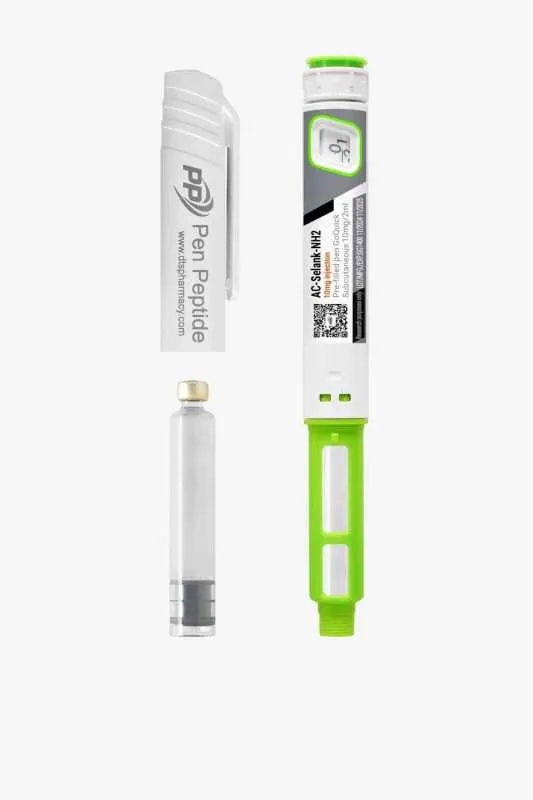
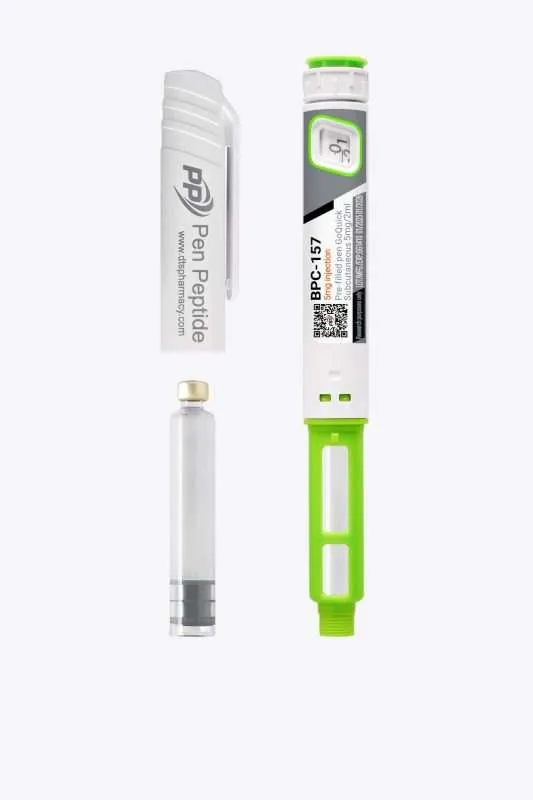
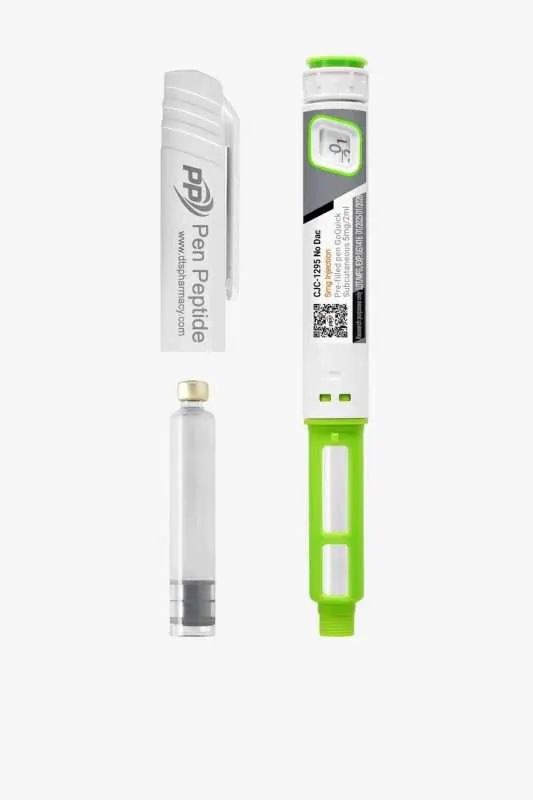
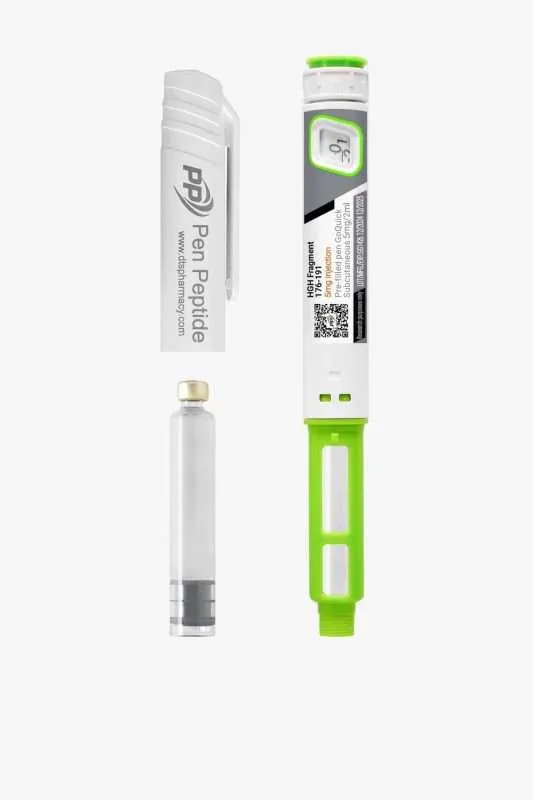
The difference between CJC-1295 with DAC and no-DAC versions of this GHRH-related peptide is more than a naming convention. The presence of a drug affinity complex changes the molecule’s binding behavior, its survival in plasma, and therefore the way researchers approach experimental design. Search queries for cjc-1295 dac, cjc 1295 dac dosage, and cjc 1295 ipamorelin often lead to conflicting product labels, making it essential to separate chemical terminology from mechanistic reality. In this article, DAC-containing and non-DAC GHRH analogs are compared using evidence from biochemical and animal studies.
GHRH Signaling and the Rationale for Synthetic Analogs
Growth hormone-releasing hormone (GHRH) is a hypothalamic peptide that stimulates the synthesis and release of growth hormone from somatotroph cells in the anterior pituitary. Once released, growth hormone exerts many of its effects through insulin-like growth factor-1, which is produced mainly in the liver and other peripheral tissues. Because GHRH has a very short plasma half-life in vivo, researchers have long searched for stabilized fragments and receptor-selective analogs.
The truncated sequence GHRH(1-29) retains most of the receptor-activating properties of the full 44-amino-acid endogenous hormone. This property made GHRH(1-29) the chemical scaffold for subsequent modifications. The original characterization of GHRH and its active fragments is rooted in work from the early 1980s, when Rivier and colleagues identified a growth hormone-releasing factor from a pancreatic islet tumor.
GHRH binds to a class B G protein-coupled receptor on pituitary somatotrophs, leading to increased cyclic AMP production and growth hormone secretion. Peptidases in plasma rapidly degrade native GHRH, particularly at the N-terminus, so stabilizing that region is critical for any long-acting research analog. Synthetic GHRH analogs attempt to preserve receptor affinity while resisting enzymatic breakdown.
What Does CJC-1295 with DAC Do?
CJC-1295 is built from the GHRH(1-29) core but is modified to resist enzymatic degradation. The DAC component is a separate chemical structure designed to associate with serum albumin, the most abundant protein in blood. In CJC-1295 with DAC, albumin binding creates a long-circulating pool of the peptide.
The DAC module is not a growth hormone secretagogue by itself. It is better understood as a pharmacokinetic tool that changes how long the peptide remains available to GHRH receptors. Because albumin has a long circulatory half-life, the attached GHRH analog is protected from rapid clearance and peptidase degradation.
Receptor-binding studies in rat pituitary cells have shown that albumin conjugation does not prevent the peptide from activating the GHRH receptor. Jetté et al. reported that hGRF(1-29)-albumin bioconjugates, including CJC-1295, retained the capacity to stimulate growth hormone release in vitro. In animal studies, the prolonged circulation of the conjugate translates into a more sustained signal to the pituitary rather than the brief signal produced by unmodified GHRH.
What Is the No-DAC Version?
Peptides labeled CJC-1295 no DAC are not a formally standardized single chemical throughout every supplier. In most cases, they are stabilized GHRH(1-29)-type analogs that lack the albumin-binding DAC module. They are sometimes called modified GRF(1-29) in research catalogs.
Because no-DAC versions do not bind albumin, they are cleared more rapidly after administration in laboratory animals. A shorter circulating half-life can be useful for protocols that require frequent, discrete interventions rather than continuous GHRH receptor stimulation. The sustained exposure observed with CJC-1295 with DAC is not always necessary or desired.
An overview of this peptide family’s nomenclature and history can be found in the Wikipedia article for CJC-1295, but the practical differences are best understood through pharmacokinetic comparisons.
How CJC-1295 with DAC Compares to No-DAC Analogs
The main difference between CJC-1295 with DAC and no-DAC analogs is not receptor specificity but duration of action. Without DAC, an experimental peptide is vulnerable to peptidase breakdown and renal filtration soon after entering circulation. With DAC, peptide-albumin binding reduces those clearance mechanisms and allows the GHRH signal to persist.
This distinction has downstream consequences for growth hormone and IGF-1 measurements. Short-acting analogs tend to produce clear peaks shortly after each dose, while long-acting conjugates may produce more continuous stimulation. Investigators should choose growth hormone time points and IGF-1 readouts that match the exposure profile of the peptide being tested.
The table below condenses the differences that matter in study design.
| Parameter |
CJC-1295 with DAC |
No-DAC analog (modified GRF 1-29) |
| Albumin interaction |
Present through the DAC module |
Absent; shorter circulating residence |
| Primary resistance strategy |
DAC-mediated albumin binding plus stabilizing substitutions |
Stabilizing substitutions alone |
| Observed GH and IGF-1 pattern |
Sustained receptor stimulation reported in animal studies |
Shorter, intermittent peaks after dosing |
| Typical research dosing interval |
Less frequent in repeat-dose animal models |
More frequent to maintain GHRH activity |
| Common combination in research |
Can be paired with other peptides, but long-acting kinetics must be considered |
Often paired with ipamorelin for short-acting secretagogue studies |
Interpreting cjc 1295 dac dosage in Preclinical Protocols
Researchers evaluating cjc 1295 dac dosage must first define whether the goal is continuous GHRH activation or episodic growth hormone sampling. Because the DAC form remains in circulation for an extended period, dosage selection is usually based on body weight and the desired exposure window in animal models, not on human dosing guides.
No universal cjc 1295 dac dosage exists across animal models. Dose-response experiments typically compare several concentration levels and use plasma growth hormone, IGF-1, or pituitary gene expression as endpoint measures. The route of administration, reconstitution volume, vehicle composition, and dosing interval should all be reported so that results can be interpreted and reproduced.
This article refers only to laboratory research contexts. The peptides described here are not intended for human self-administration, and the dosing logic above is not a clinical recommendation.
The Role of the GHRH Analog Scaffold in Dose Response
The no-DAC version of CJC-1295 has a different dose-response relationship because it does not benefit from albumin-mediated retention. In a single-dose study, the no-DAC form may produce a robust but brief growth hormone pulse. If the study requires repeated pulses over several days, the no-DAC peptide must be dosed more often than CJC-1295 with DAC.
For chronic endpoints such as body composition, IGF-1 levels, or tissue gene expression, total weekly exposure may matter more than the height of any single growth hormone peak. CJC-1295 with DAC can achieve that sustained exposure with fewer injections, whereas no-DAC versions offer more control over the timing of each individual pulse.
The cjc 1295 ipamorelin Combination in Research
Ipamorelin is a synthetic growth hormone secretagogue that activates the ghrelin receptor GHS-R1a. It does not bind to the GHRH receptor, but it acts in the same somatotroph tissue and can augment GHRH-stimulated growth hormone release. Because GHRH and ghrelin-receptor signaling converge on growth hormone secretion, GHRH-related analogs are frequently studied alongside ipamorelin.
The phrase cjc 1295 ipamorelin usually refers to a model in which a no-DAC CJC-1295-type GHRH analog is combined with ipamorelin. This approach has internal kinetic logic: the no-DAC GHRH analog and ipamorelin both have relatively short durations of action, allowing researchers to create discrete secretory pulses with each injection.
If CJC-1295 with DAC is used in the same combination, the GHRH receptor agonist will remain in circulation after ipamorelin has been metabolized. That can be useful for studies of sustained GHRH tone, but it does not recapitulate a simultaneous short-acting dual pulse. Researchers should therefore state clearly whether the DAC-containing peptide is meant to provide background stimulation or to participate in an acute co-stimulation model.
Mechanistic Synergy and Experimental Timing
Growth hormone secretagogues such as ipamorelin increase growth hormone release through GHS-R1a, which is expressed in the pituitary and hypothalamus. When combined with a GHRH receptor agonist, the two pathways can produce a larger growth hormone response than either peptide alone. This synergy is relevant for in vivo and ex vivo studies that model the endogenous control of growth hormone secretion.
The timing of co-administration matters. If a short-acting secretagogue such as ipamorelin is given when a long-acting GHRH analog is already present, the resulting pattern is different from simultaneous administration of two short-acting peptides. The use of the exact phrase cjc 1295 ipamorelin in a protocol should therefore include details about injection sequence, interval, and the type of GHRH analog used.
Practical Considerations for Choosing an Analog
An experiment designed to measure acute growth hormone pulses may favor a no-DAC GHRH analog because the peptide can be cleared quickly and the system can return to baseline between doses. In contrast, an experiment designed to evaluate sustained changes in IGF-1 may benefit from CJC-1295 with DAC, because the long-acting conjugate reduces the need for repeated handling of animals.
Product labeling is another variable. The designation CJC-1295 with DAC is not enough to confirm exact peptide content or purity. Researchers should verify peptide sequence, salt form, net peptide content, and purity by high-performance liquid chromatography and mass spectrometry before initiating any protocol.
All statements in this article are based on in vitro receptor assays, biochemical characterization, and animal research. No claim is made regarding safety or efficacy in humans.
When selecting a GHRH-related research peptide, the primary decision is whether the experimental question requires sustained GHRH receptor tone or brief, repeatable stimulation. CJC-1295 with DAC offers prolonged exposure through albumin binding, while no-DAC analogs provide shorter signaling windows that are easier to pair with other short-acting molecules such as ipamorelin. A clear endpoint, verified peptide identity, and transparent dose reporting will always be more meaningful than nomenclature alone.
References
- Jetté L, Léger R, Thibaudeau K, et al. Human growth hormone-releasing factor (hGRF)1-29-albumin bioconjugates activate the GRF receptor on the anterior pituitary in rats: identification of CJC-1295 as a long-acting GRF analog. Endocrinology. 2005;146(4):1936-1948. PubMed
- Rivier J, Spiess J, Thorner M, Vale W. Characterization of a growth hormone-releasing factor from a human pancreatic islet tumour. Nature. 1982;300(5892):276-278. PubMed
- Howard AD, et al. A receptor in pituitary and hypothalamus that functions in growth hormone release. Science. 1996;273(5277):974-977. PubMed
- Kojima M, Hosoda H, Date Y, Nakazato M, Matsuo H, Kangawa K. Ghrelin is a growth-hormone-releasing acylated peptide from stomach. Nature. 1999;402(6762):656-660. PubMed